Community-Centered Design Process
Creating Coherent Systems of Opportunity for Young People
The Linked Learning Alliance approach to supporting secondary school redesign helps educators and community stakeholders work together to design schools that are responsive to local priorities and contexts, while preparing young people for a complex future. This process has been developed through years of work with pathways, community schools, postsecondary partners, employers, and local communities.
Common applications
- Designing a new pathway or pathway-centered school model
- Integrating community schools and Linked Learning strategies into a coherent redesign
- Strengthening alignment among pathways, dual enrollment, and workforce partners
- Developing implementation roadmaps, accountability structures, and continuous improvement plans for major redesign initiatives
A Five-Phase Design Cycle
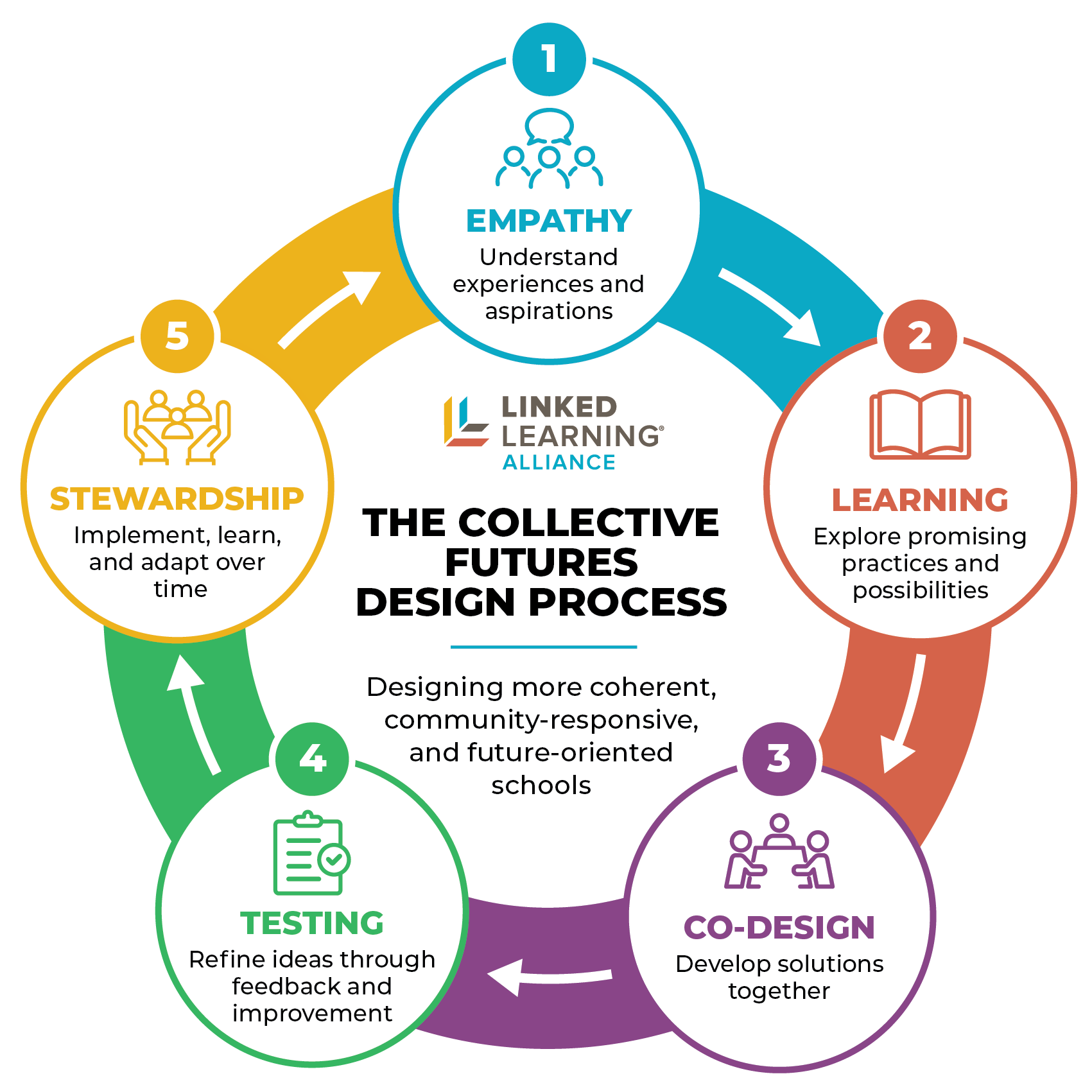
The process is grounded in a simple belief: Sustainable school improvement is most likely when the people most affected by change help shape it. Rather than beginning with predetermined solutions, communities move through a continuous cycle of understanding current experiences, learning from promising practices, co-designing new approaches, testing ideas, and establishing structures that support long-term stewardship and continuous improvement.
Emphasis on Planning, Implementation, and Learning
Many school redesign approaches focus primarily on planning or implementation. Our community-centered process places equal emphasis on learning. Before communities are asked to make design decisions, participants are given opportunities to broaden their understanding of what is possible. This is important for educators, who often benefit from seeing strong examples beyond their own experience. It is likewise important for students, families, employers, and community partners. Meaningful co-design requires ensuring that everyone at the table has access to the knowledge and examples necessary to participate as informed partners.
For this reason, the learning phase extends beyond gathering information about a local school or community. Participants also examine examples of high-quality Linked Learning implementation and explore postsecondary and workforce opportunities available to young people in their region. Depending on their interests, they may also learn from other approaches aligned with Linked Learning, such as community schools, project-based learning, or portfolio defense. This exposure helps participants develop a broader understanding of what’s possible before they begin making design choices.
The aim is to help communities design coherent systems of opportunity that connect student support, academic learning, career preparation, postsecondary pathways, and community partnership—and establish the stewardship structures necessary to sustain and improve those systems over time.
The process helps communities

- Build a shared understanding of student experiences, community aspirations, and opportunities
- Develop a broader vision of what’s possible by learning from promising practices, research, and strong Linked Learning schools
- Create a more balanced and informed decision-making process among educators, students, families, employers, and community partners
- Design coherent systems that connect student support, academic learning, career preparation, and postsecondary opportunity
- Establish structures for implementation, accountability, and continuous learning and improvement
related services
The Linked Learning Alliance school redesign process is integral to a set of Alliance services supporting county offices of education as they help school districts navigate major state education investments, translate policy goals into meaningful local practice, strengthen implementation quality, and promote learning across sites. Key services include: